
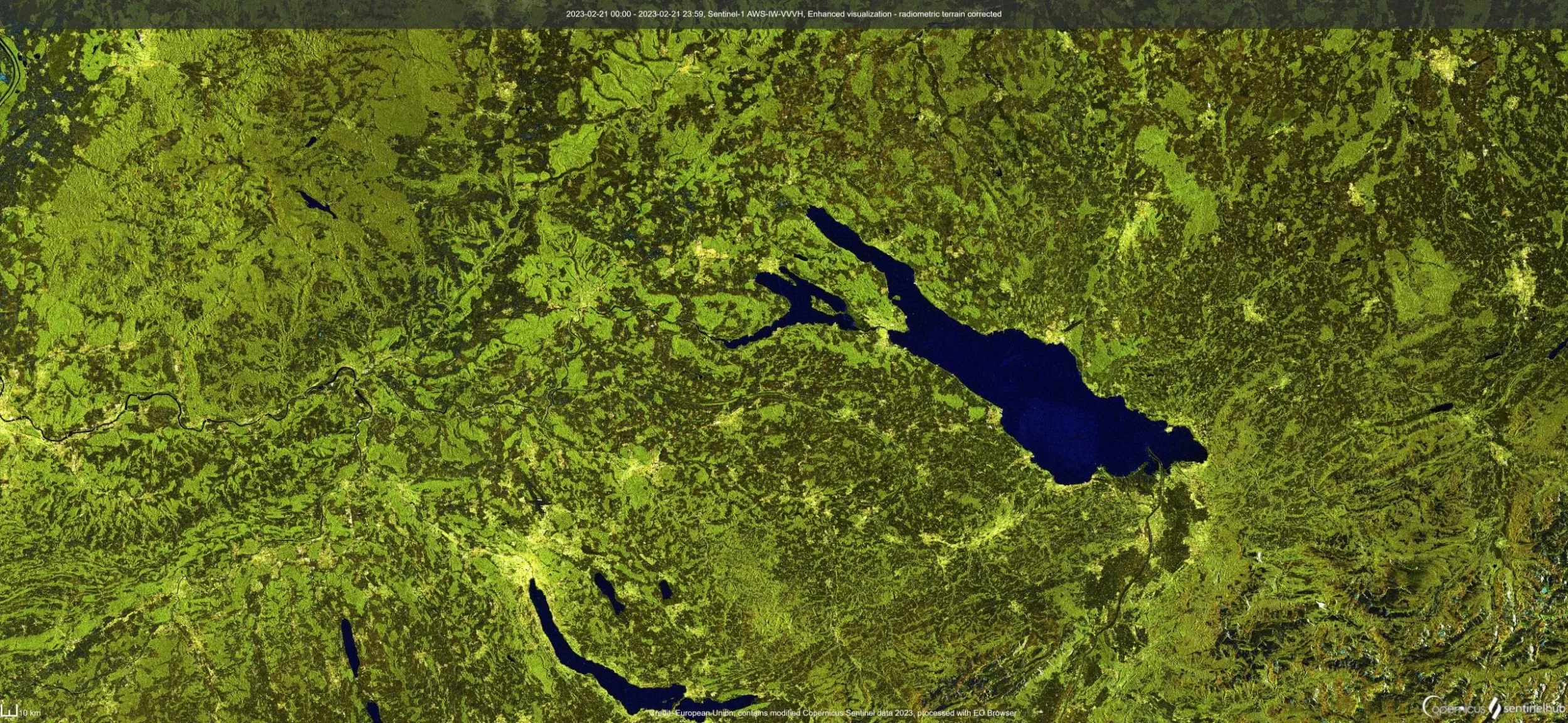
Novel EO data
The Sentinel satellite missions are prime components of the Copernicus services. Among the six High-Priority Candidate Missions three will provide relevant data for the Copernicus Land service: CHIME (Hyperspectral imaging), LSTM (Land Surface Temperature Monitoring) and ROSE-L (L-band Synthetic Aperture Radar). Other missions have the potential to provide precursor or complementary data to Copernicus as Contributing Missions, either from institutional agencies (e.g., NASA/NISAR, NASA/GEDI, CNES/TRISHNA, NASA/ECOSTRESS, DLR/ENMAP, ASI/PRISMA) or from commercial and Newspace actors (e.g. Pleiades-Neo, CO3D, Planet, Blacksky).
The objective of this method is to assess and evaluate the full potential of space-based novel EO data in addressing Copernicus user requirements by contributing efficiently to the development of new products or the improvement of the existing ones. This method will investigate the most relevant space missions which will be in operation during EvoLand’s lifetime (2023-2025) as well as future missions that are expected to be operational between 2025 and 2030. Activities under Novel EO data will encompass surveying existing and future EO data, assessing the feasibility and availability of simulated data for upcoming missions, selecting and benchmarking the most relevant EO missions for EvoLand, and producing the relevant EO data sets over the test and prototype sites.

Copernicus Sentinel-2, Credits: European Commission, DG DEFIS
Discover prototypes that use novel EO data
C6 – Small landscape features mapping
Improving accuracy and efficiency through novel data to support Small Landscape Features (SLF) products.
C5 – Cropland/grassland GPP monitoring
Rolling out high-resolution GPP data (10-daily, 10m) for grassland and cropland, currently non-existing over Europe.
Newsletter
Stay current! Subscribe to our EvoLand newsletter!